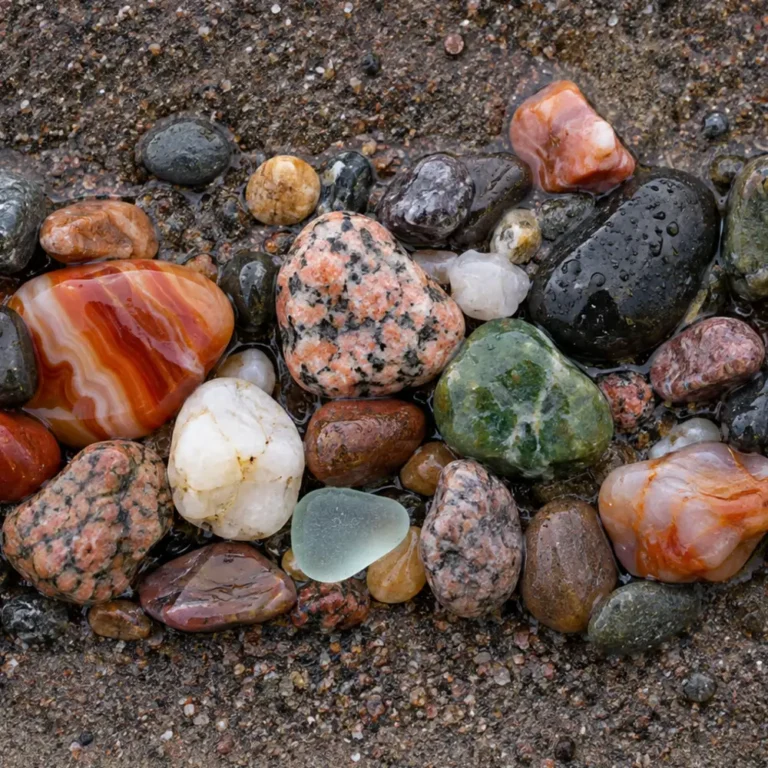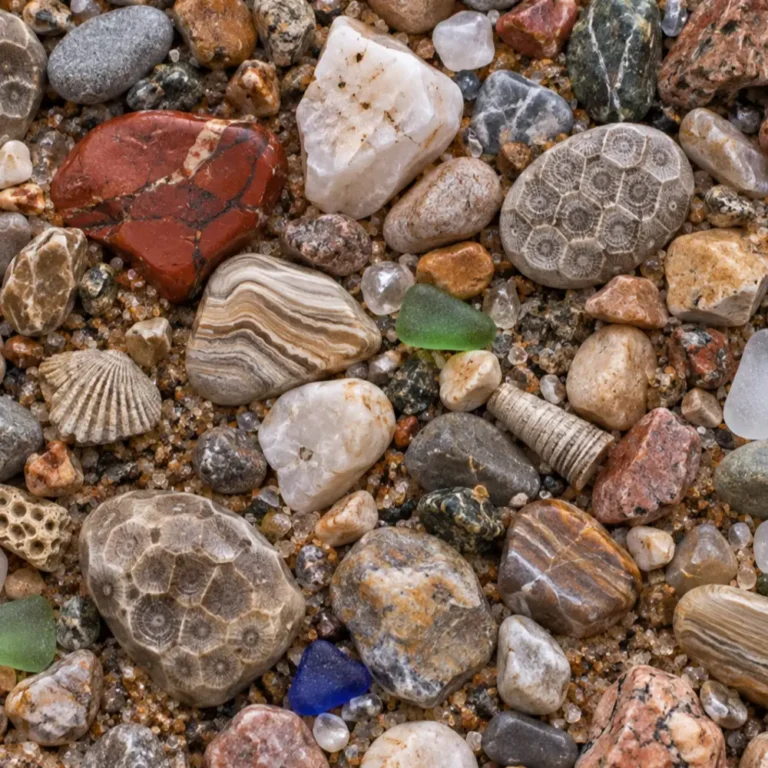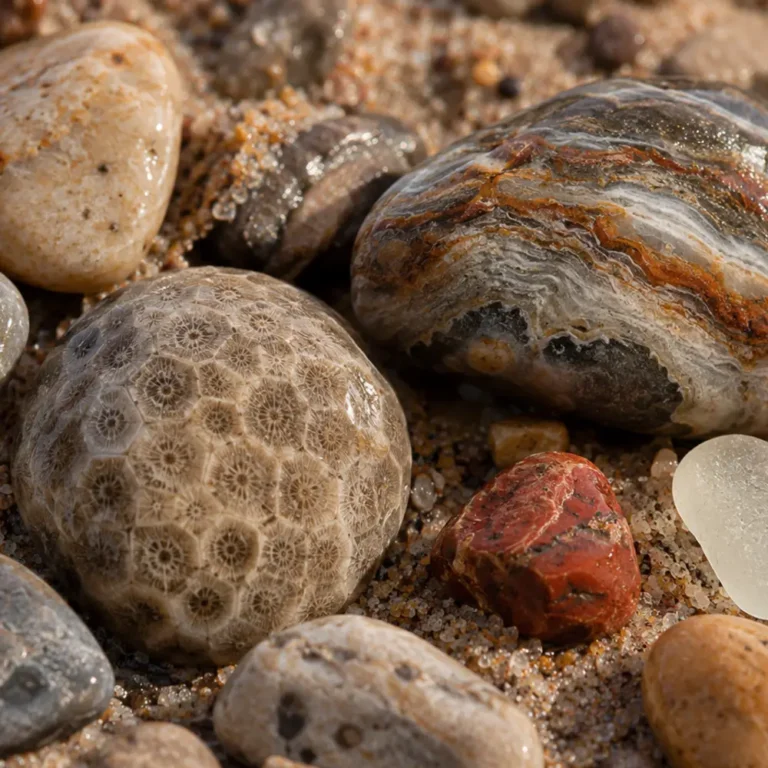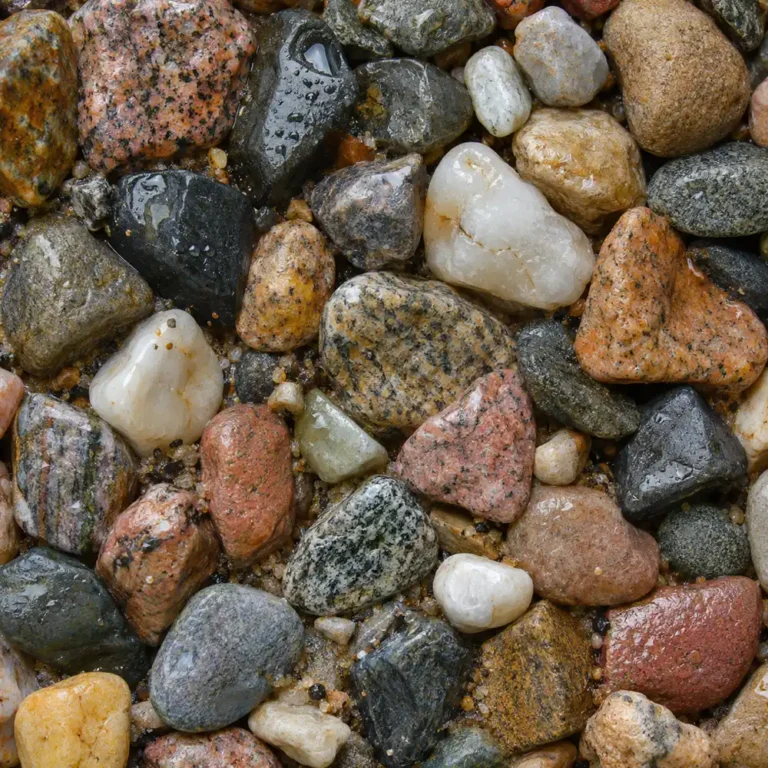
Lake Superior’s beaches are made mostly of volcanic and very old rocks: dark basalt, pink granite and rhyolite, red jasper and sandstone, plus the stones people come for: Lake Superior agates (“Lakers”), greenstones, thomsonite and native copper. Most of this rock formed about 1.1 billion years ago, when lava poured out along a giant rift under what is now the lake. You can collect on many public beaches in Minnesota, Wisconsin and Michigan, but not in Minnesota state parks or in the national parks and lakeshores around the lake.
| What you can find | What it is | Where it’s most common |
|---|---|---|
| Lake Superior agate | Banded red, orange and white chalcedony | All around the lake, plus inland gravel |
| Greenstone (chlorastrolite) | Green “turtle-back” pattern; Michigan’s state gem | Keweenaw Peninsula and Isle Royale (no collecting on Isle Royale) |
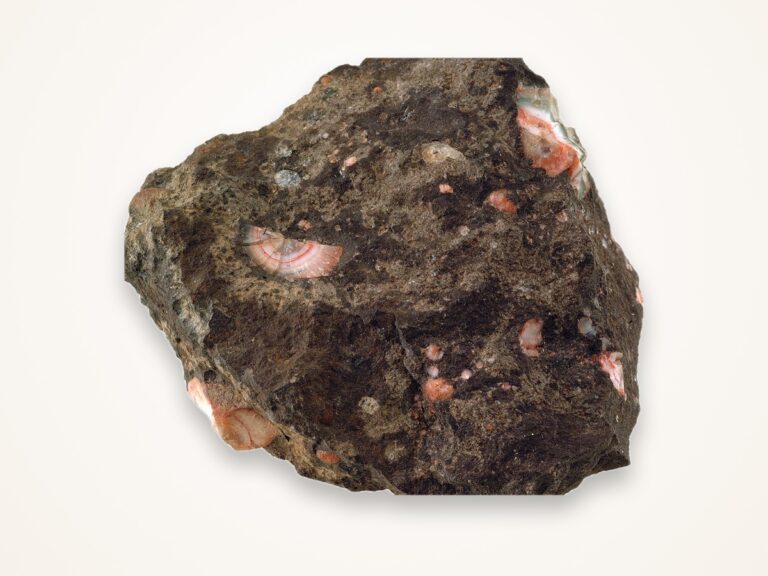
| Thomsonite | Pink, green and white rings or “eyes” in small nodules | Minnesota’s North Shore, around Good Harbor Bay |
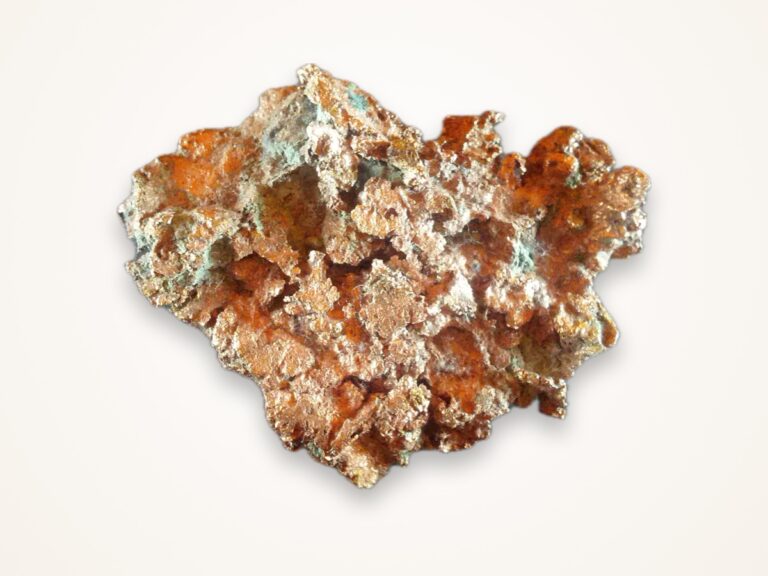
| Native copper | Pure copper, often green on the outside | Keweenaw Peninsula, Michigan |
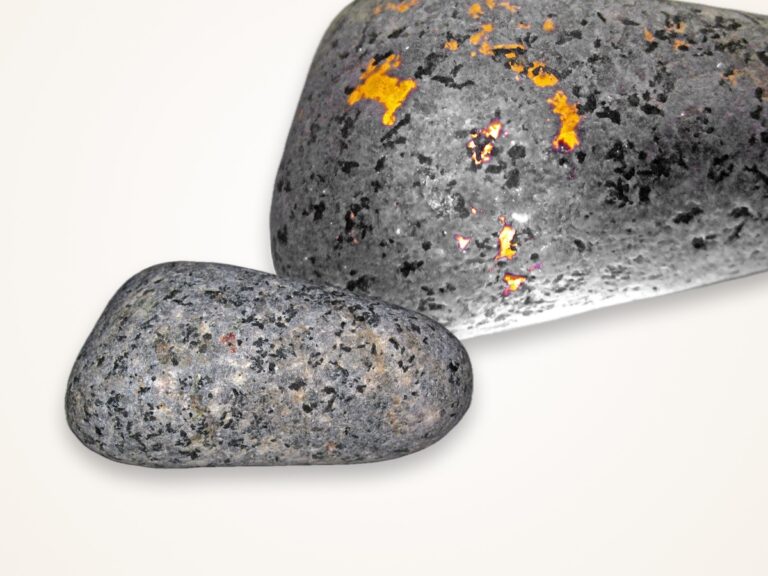
| Yooperlite (fluorescent syenite) | Gray stone that glows orange under UV light | Michigan’s Upper Peninsula shore |
| Basalt | Dark gray to black lava rock, often with filled gas holes | Everywhere, especially the North Shore and Keweenaw |
| Green-streaked basalt | Basalt colored green by the mineral epidote | Everywhere |
| Rhyolite | Red-brown to pinkish fine-grained volcanic rock | North Shore and elsewhere |
| Granite | Speckled rock with clear quartz and pink feldspar | Everywhere |
| Jasper | Opaque red chert, sometimes mixed with other rock | Everywhere |
| Red sandstone (Jacobsville) | Red, sometimes with white streaks or spots | Michigan’s south shore |
Why are Lake Superior rocks so different?
About 1.1 billion years ago, North America began to split apart along the Midcontinent Rift. Huge lava flows filled the rift and cooled into basalt, the dark rock that still forms much of the shoreline today. Gas bubbles in the lava later filled with minerals, creating agates, greenstones, thomsonite and copper.
Later, rivers deposited red sand that hardened into the Jacobsville Sandstone, the red rock of Michigan’s south shore. Its color comes from iron oxide in the cement between the grains.
During the Ice Age, glaciers crushed and moved all of this rock, mixed in granite and other rocks from Canada, and spread it across the shoreline and far inland. The waves keep sorting and rounding these stones today.
The most sought-after stones
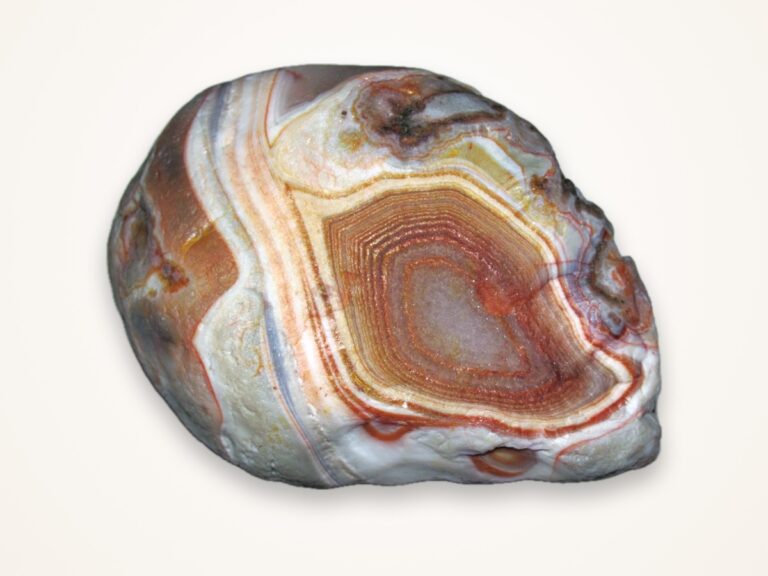
Lake Superior agates
The lake’s most famous stone: banded, translucent, usually red, orange and white. Most are marble-sized. See our complete Lake Superior agate guide.
Greenstones (chlorastrolite)
Chlorastrolite, also called Isle Royale greenstone, shows a green, mottled “turtle-back” pattern. It formed as cavity fillings in lava flows. It’s found in the Keweenaw Peninsula and on Isle Royale, and Michigan made it the official state gem in 1972. Collecting on Isle Royale is prohibited: it’s a national park.
Thomsonite
Thomsonite forms small nodules with rings or “eyes” in pink, green and white. On Minnesota’s North Shore, the nodules weather out of basalt near Terrace Point and wash up on the beaches around Good Harbor Bay, southwest of Grand Marais, Minnesota. Much of the land above the beach there is private.
Native copper
The Keweenaw Peninsula is famous for native copper, which turns up as pebbles and as bands in rare copper replacement agates. The Keweenaw is the only place in the world known to produce agates with copper bands.
Yooperlites
Gray syenite stones containing fluorescent sodalite that glow bright orange under a UV flashlight at night, found mainly along Michigan’s Upper Peninsula shore. See our Yooperlite guide.
Everyday Lake Superior beach rocks
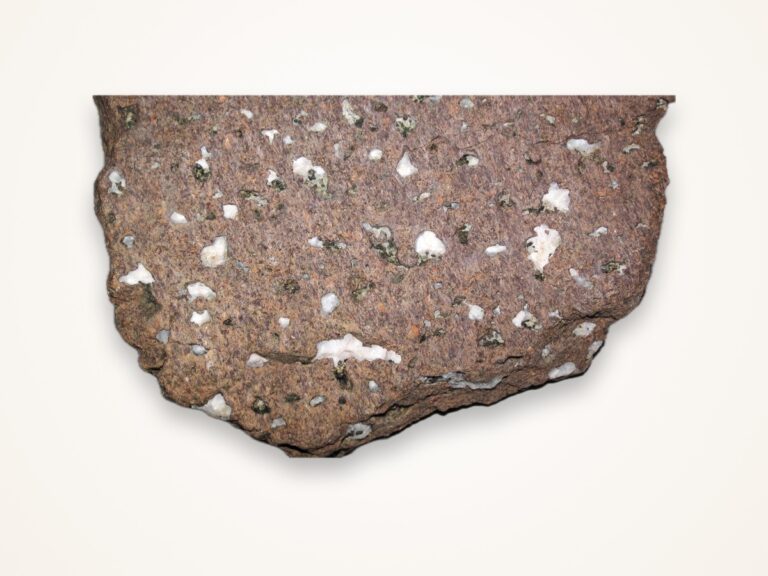
Most of what you’ll pick up isn’t rare, but it’s still beautiful and tells the story of the lake:
- Basalt: dark and dense. Many basalt pebbles have small light-colored spots: those are filled gas bubbles (amygdules). Some contain tiny agates.
- Green basalt: colored green by epidote. If you’ve wondered what makes the green lines in Lake Superior rocks, it’s usually epidote.
- Basalt breccia: basalt fragments cemented together by milky quartz, sometimes with red jasper.
- Rhyolite: a red-brown to pinkish volcanic rock, lighter in color than basalt.
- Granite: small interlocking grains of clear quartz and flesh-colored feldspar.
- Jacobsville Sandstone: red, rounded by the waves after breaking off the cliffs.
- Quartz, quartzite and chert: common on beaches like those near Pictured Rocks.
Where are the best places to find rocks on Lake Superior?
| Area | What it’s known for | Watch out for |
|---|---|---|
| Minnesota North Shore (Duluth to Grand Portage) | Agates, thomsonite near Good Harbor Bay, basalt and rhyolite | No collecting in Minnesota state parks (Gooseberry Falls, Split Rock, Tettegouche and others) |
| Wisconsin South Shore | Agates and glacial stones on mainland beaches | No collecting in Apostle Islands National Lakeshore |
| Michigan: Keweenaw Peninsula | Native copper, greenstones, copper replacement agates, agates | Old mine sites and private land |
| Michigan: Marquette to Grand Marais | Agates, Yooperlites, Jacobsville sandstone | No collecting in Pictured Rocks National Lakeshore |
| Michigan: eastern Upper Peninsula (toward Whitefish Point) | Agates and Yooperlites | Check local and state rules |
| Inland | Agates in gravel pits, gravel roads and fields | Owner’s permission required |
When to go:
- After storms and strong winds, when big waves bring fresh stones to the surface. The first calm day after big waves is a local favorite.
- In spring, after winter ice reworks the beaches.
- On calm, sunny days, when wet, sunlit agates glow.
- At night with a UV flashlight for Yooperlites. Use a filtered 365 nm light: cheap UV lights often show nothing.
Set your expectations: most rock hunting trips bring home a bag of pretty basalt, granite and jasper and only a few agates. That’s normal, and it’s part of the fun.
Can you take rocks from Lake Superior?
Yes in many places, but not everywhere. Here are the main rules:
| Where | Can you collect? |
|---|---|
| Michigan state land and Great Lakes shoreline managed by the state | Yes, up to 25 lb per person per year in total, for personal, non-commercial hobby use (Michigan Administrative Code R 299.922) |
| Minnesota state parks and scientific and natural areas | No. The Minnesota DNR says rock collecting isn’t allowed in state parks |
| Wisconsin state properties | Depends on the property. Some sites are closed to collecting |
| Isle Royale National Park | No. Collecting rocks and greenstones is prohibited |
| Apostle Islands National Lakeshore | No. The park says collecting rocks isn’t allowed |
| Pictured Rocks National Lakeshore | No. Visitors were fined in 2026 for taking rocks from the park |
| City and county beaches | Rules vary. Look for posted signs |
| Private land, gravel pits | Only with the owner’s permission |
Rules change, and posted signs always win. See our full guide to rock collecting rules.
Frequently asked questions
What kind of rocks are in Lake Superior?
Mostly volcanic basalt and rhyolite, granite, red jasper and red sandstone, with agates, greenstones, thomsonite and native copper among the prized finds. Much of this rock is about 1.1 billion years old.
What is the green color in Lake Superior rocks?
Usually the mineral epidote, which colors many basalt pebbles green. A green stone with a turtle-shell pattern could be a greenstone (chlorastrolite).
Is it illegal to take rocks from Lake Superior?
Not everywhere. It’s illegal in national parks and lakeshores (Isle Royale, Pictured Rocks, Apostle Islands) and in Minnesota state parks. On Michigan state land you can take up to 25 lb per year.
Are there diamonds in Lake Superior rocks?
Not on the beaches. Clear, glassy stones on Lake Superior beaches are almost always quartz.
Are there fluorescent rocks on the shores of Lake Superior?
Yes. Syenite pebbles containing fluorescent sodalite, known as Yooperlites, glow orange under UV light. They’re found mainly along Michigan’s Upper Peninsula shore.
What is the red rock along Lake Superior?
Often Jacobsville Sandstone, especially on Michigan’s south shore, or red rhyolite and jasper. Red banded, translucent stones are likely agates.
Explore Lake Superior
- Lake Superior agate: identify, find and collect legally
- Yooperlites
- What to bring rockhounding
- Rockhounding for beginners
- Rock collecting rules
- Other Great Lakes: Lake Michigan, Lake Huron, Lake Erie, Lake Ontario
- Rockhounding by state: Michigan, Minnesota, Wisconsin
Sources (12)
- Michigan Technological University, Keweenaw Geoheritage, “Beach Rocks”: https://www.geo.mtu.edu/KeweenawGeoheritage/BeachStones/Sandstone.html
- U.S. Geological Survey, “Geology of Pictured Rocks National Lakeshore”: https://www.usgs.gov/geology-and-ecology-of-national-parks/geology-pictured-rocks-national-lakeshore
- Michigan Compiled Laws, Act 56 of 1972 (state gem): https://legislature.mi.gov/documents/mcl/pdf/MCL-ACT-56-OF-1972.pdf
- USGS Bulletin 1309 (Isle Royale geology, chlorastrolite): https://npshistory.com/publications/geology/bul/1309/sec6.htm
- Wikipedia, “Chlorastrolite”: https://en.wikipedia.org/wiki/Chlorastrolite
- Wikipedia, “Lake Superior agate”: https://en.wikipedia.org/wiki/Lake_Superior_agate
- Mineralogical Society of America, American Mineralogist vol. 24 (thomsonite, Thomsonite Beach): https://msaweb.org/AmMin/AM24/AM24_726.pdf
- National Park Service, Apostle Islands, “Laws & Policies”: https://www.nps.gov/apis/learn/management/lawsandpolicies.htm
- National Parks Traveler, “Visitors Fined For Vandalizing Cliff Face At Pictured Rocks National Lakeshore” (March 2026): https://www.nationalparkstraveler.org/2026/03/visitors-fined-vandalizing-cliff-face-pictured-rocks-national-lakeshore
- Minnesota DNR, “Geology in state parks”: https://www.dnr.state.mn.us/education/geology/digging/stateparks.html
- Michigan Administrative Code R 299.922(hh): https://www.law.cornell.edu/regulations/michigan/Mich-Admin-Code-R-299-922
- Photo credits (via Wikimedia Commons; some backgrounds removed): James St. John (CC BY 2.0); Shannon Heinle (CC0); John Mortimore (CC BY-SA 3.0).
Last updated: November 29, 2026. Spotted something out of date? Tell us.