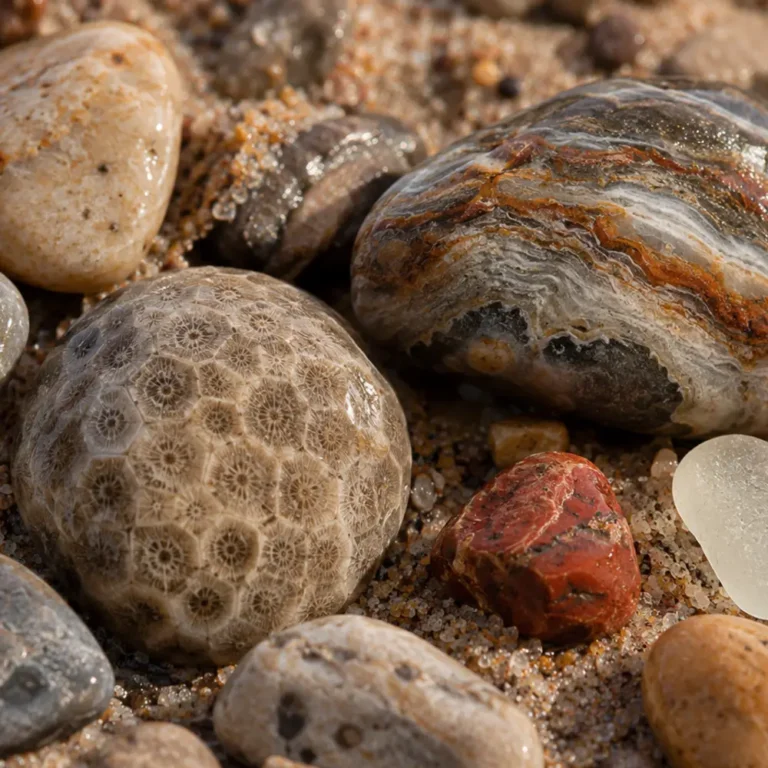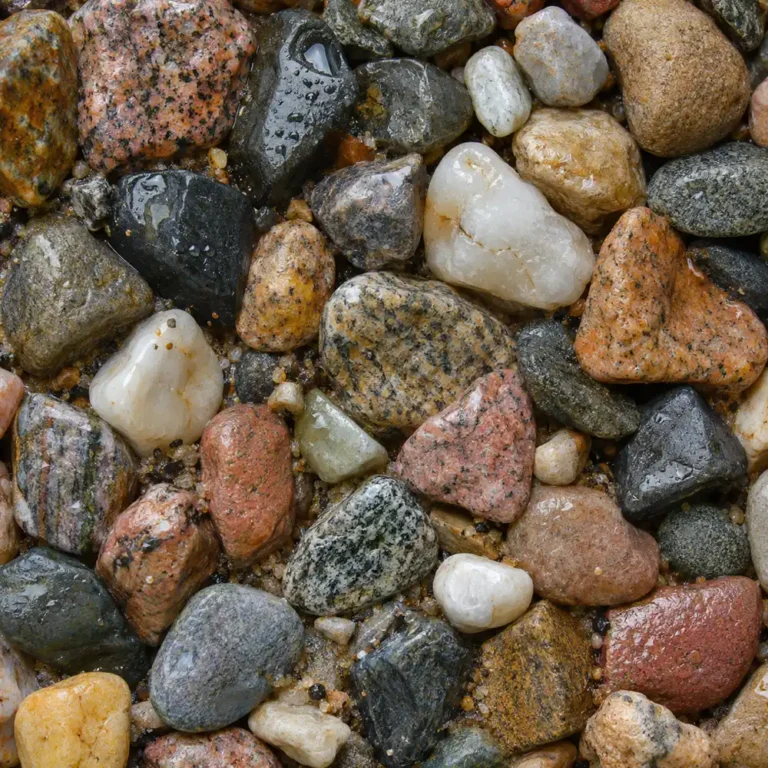
For a day of rock hunting on a Great Lakes beach, you only need a few things: a bag or bucket, a spray bottle of water, sturdy waterproof shoes, layers for the wind, and a small magnifying glass. Add a long-handled scoop and waders if you want to search in the water, and a filtered 365 nm UV flashlight if you’re hunting Yooperlites at night. Leave the hammer at home: on most beaches you just pick up what the waves bring.
The essentials (every trip)
| Item | Why you need it |
|---|---|
| Bucket, mesh bag or sturdy tote | To carry your haul. A mesh bag lets sand and water drain out |
| Spray bottle or water jug | Wet stones show their color and patterns. Dry Petoskey stones and agates are easy to miss |
| Waterproof boots or water shoes | Rocky beaches are slippery, and the water’s edge is where the best stones are |
| Layers and a wind jacket | The lakes are cold and windy, even in summer, especially Lake Superior |
| Small magnifying glass (10x loupe) | To check bands, cells and crystals before you keep a stone |
| Small zip bags or egg cartons | To keep small or fragile finds apart, and note where you found them |
| Sun protection | Hat, sunglasses and sunscreen: the light reflects off the water |
| Water and snacks | Good stretches of beach are often far from any store |
| Phone with offline maps | Many shores, especially in the Upper Peninsula, have little or no cell signal |
Nice to have
| Item | When it helps |
|---|---|
| Long-handled rock scoop (a sieve on a pole) | To pick stones from the water without bending over or getting soaked. Serious agate hunters almost all carry one |
| Waders or wading boots | To search the shallow water, where fresh stones roll in. Lake Superior water is cold most of the year |
| Knee pads or a small cushion | For fossil hunting, when you spend time kneeling on the gravel |
| Field guide | To identify finds on the spot (see “Books” below) |
| Small towel | To dry stones and check for scratches or patterns |
| Bug spray or a mosquito head net | The Upper Peninsula and the North Shore can be buggy in early summer |
| Walking stick | For balance on wet, rolling stones. Night hunters sometimes tape their UV light to it |
| Folding cart or wagon | For families and long beaches |
For night hunting with a UV light (Yooperlites)
| Item | Why |
|---|---|
| Filtered 365 nm UV flashlight | The most important piece. Cheap, unfiltered UV lights often show almost nothing. |
| UV-blocking glasses | Protects your eyes from the UV light |
| Regular headlamp | To walk safely between searches |
| Warm clothes | Beach nights are cold, even in summer |
| A buddy | Never hunt alone at night, and tell someone where you’re going |
For winter and cold-season trips (beach glass and storm hunting)
Beach glass collectors and serious agate hunters go out after storms all year round. Add:
- Ice grippers or cleats for icy shorelines;
- Insulated waterproof boots and gloves;
- A thermos of something hot.
Stay away from ice shelves and the edge of the water during big waves.
What you don’t need
- A rock hammer, chisel or shovel for beach hunting. On beaches you pick up loose stones. Digging into bluffs and cliffs damages the shoreline and is often illegal.
- Power tools or heavy digging equipment. They’re not allowed in Michigan state parks, and national forests limit you to hand tools.
- A metal detector in national parks and lakeshores, where they’re not allowed (for example, Indiana Dunes National Park).
- Expensive gear to start. A bucket, a spray bottle and good shoes are enough for your first trips.
Checklist by type of trip
| Trip | Bring |
|---|---|
| Family beach day | Buckets for each kid, spray bottle, water shoes, sun protection, snacks, small bags for each person’s finds |
| Petoskey stone hunting | Spray bottle (essential: Petoskeys hide when dry), bucket, magnifying glass |
| Lake Superior agate hunting | Scoop, waders, bucket, loupe, layers, bug spray. Go the first calm day after big waves |
| Night Yooperlite hunting | Filtered 365 nm UV light, UV glasses, headlamp, warm layers, a buddy |
| Fossil hunting (Lake Huron, Rockport) | Knee pads, magnifying glass, small boxes, a brush to clean finds |
| Beach glass hunting | Small bag or jar, waterproof boots, ice grippers in winter |
Rock hunting boots: what to wear on your feet
- Summer, beach only: sturdy water shoes or sandals with toe protection and a good grip.
- Searching in the water: stocking-foot waders with wading boots, or neoprene boots. Lake water is cold.
- Spring, fall and winter: insulated waterproof boots, and ice grippers when the shore is frozen.
- Rocky, rolling beaches: ankle support helps; wet stones are very slippery.
Rockhounding books and field guides
A regional field guide helps you identify finds right on the beach. Look for guides written for the Great Lakes rather than general rock books, for example:
- Rock Picker’s Guide to Lake Superior’s North Shore (Mark “Sparky” Stensaas), for Minnesota’s North Shore;
- Dan R. Lynch’s guides on Lake Superior agates and Petoskey stones;
- resources from the Michigan Geological Survey (Western Michigan University) and your local rock club.
Bringing your finds home
- Rinse them with fresh water and a soft brush. Skip vinegar on Petoskey stones and other limestone fossils: it dissolves them.
- Label your best finds with the date and the beach.
- Want them shiny? See our guide to polishing Petoskey stones. Many agate collectors prefer to leave lake-smoothed agates as they are.
- Stay within the limits. In Michigan, the yearly limit on state land is 25 lb per person. See our rock collecting rules.
Frequently asked questions
What tools do you need for rockhounding?
For Great Lakes beaches: a bucket or bag, a spray bottle, waterproof shoes, layers and a magnifying glass. A scoop and waders help for searching in the water, and a filtered 365 nm UV light is a must for night hunting.
Do you need a rock hammer for rockhounding?
Not on the beach. You pick up loose stones the waves bring in. Rock hammers are for inland outcrops and quarries, where you need permission, and they’re not appropriate on bluffs or in parks.
What should I wear rock hunting?
Waterproof boots or water shoes with a good grip, and layers with a wind jacket. The Great Lakes are cold and windy, even in summer.
What is a rock scoop?
A sieve or mesh basket on a long handle. It lets you pick stones out of the water without getting soaked or bending over.
What’s a good rockhounding gift for a beginner?
A filtered 365 nm UV flashlight, a 10x loupe, a regional field guide, a rock scoop, or a good bucket and spray bottle set.
Related guides
Sources (4)
- Michigan Administrative Code R 299.922 (state land rules): https://www.law.cornell.edu/regulations/michigan/Mich-Admin-Code-R-299-922
- USDA Forest Service, Ottawa National Forest, Other recreation opportunities: https://fs.usda.gov/r09/ottawa/recreation/opportunities/other
- National Park Service, Indiana Dunes, “Frequently Asked Questions”: https://www.nps.gov/indu/faqs.htm
- Michigan Geological Survey (WMU), MGS Rockhounds: https://mgs.wmich.edu/education-and-outreach/corekids/mgs-rockhounds/
Last updated: November 29, 2026. Spotted something out of date? Tell us.