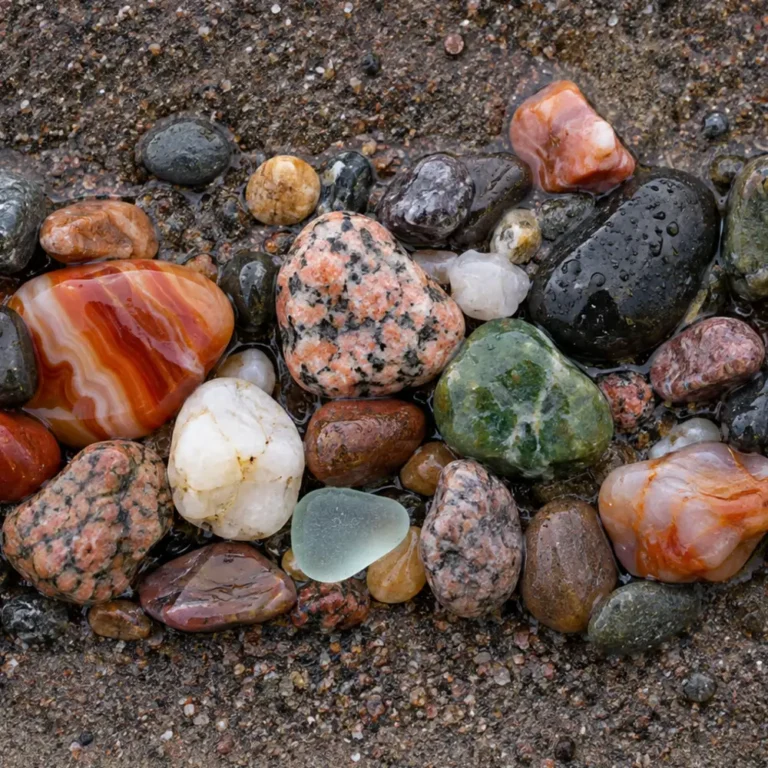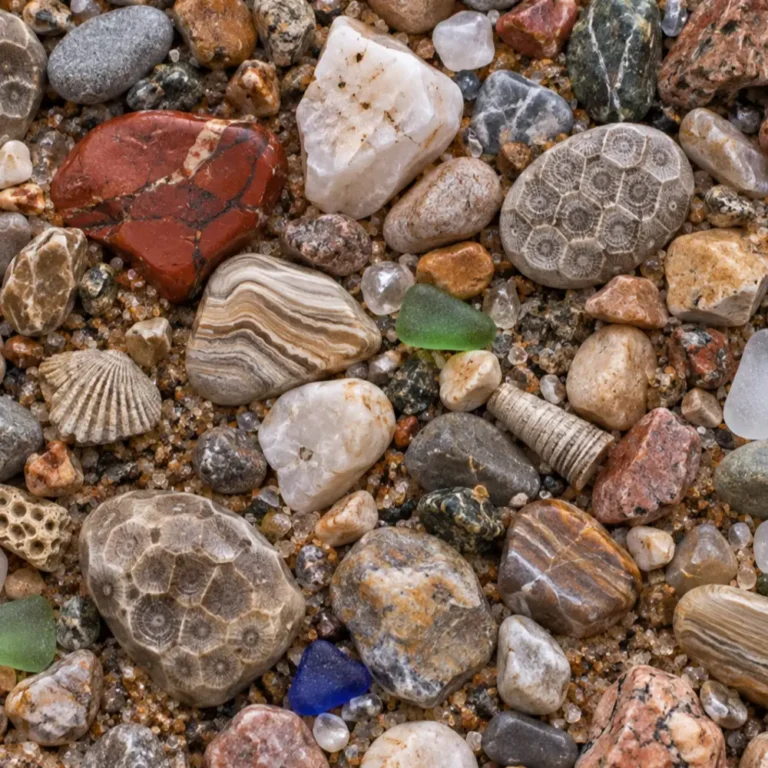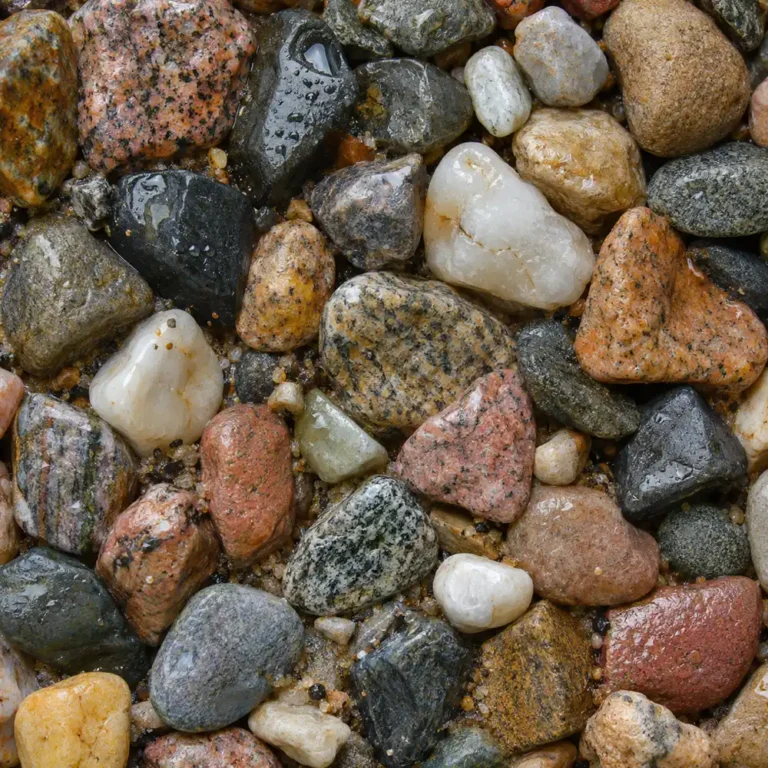
Great Lakes Rockhounding
Where to find agates, Petoskey stones and Yooperlites, and where you’re allowed to pick them up.
Join our newsletter
New guides, the best weeks to hunt each season, and the collecting rules that change. No spam. Unsubscribe anytime.
We only use your email to send this newsletter. Read our Privacy Policy.
Five lakes, five different hunts
The stones people come for
Start with the stone you want to find: how to recognize it, where it hides and what the rules are.
LAKE SUPERIOR
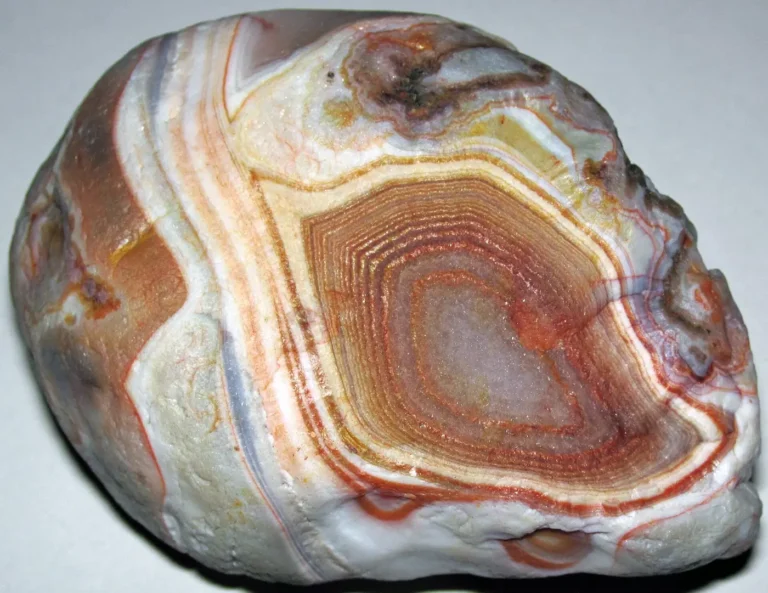
Lake Superior agate
Banded, translucent and 1.1 billion years old. The quick check, the main types, where to hunt.

LAKE MICHIGAN
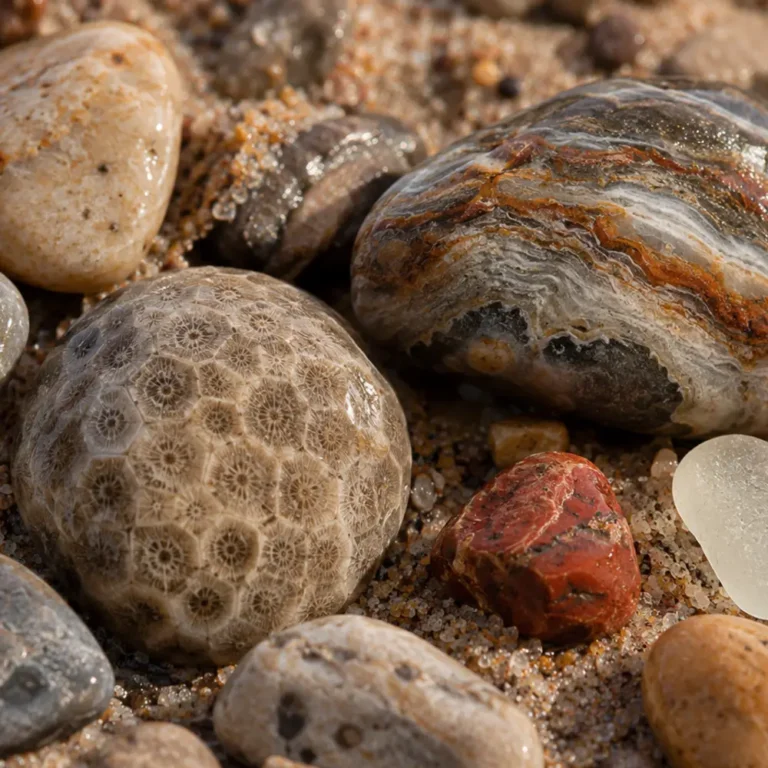
Petoskey stone
Michigan’s state stone: a fossil coral that only shows its pattern when it’s wet.

UPPER PENINSULA
Yooperlites
Gray pebbles that glow orange under a 365 nm UV light. Where, when and night rules.
ALL FIVE LAKES
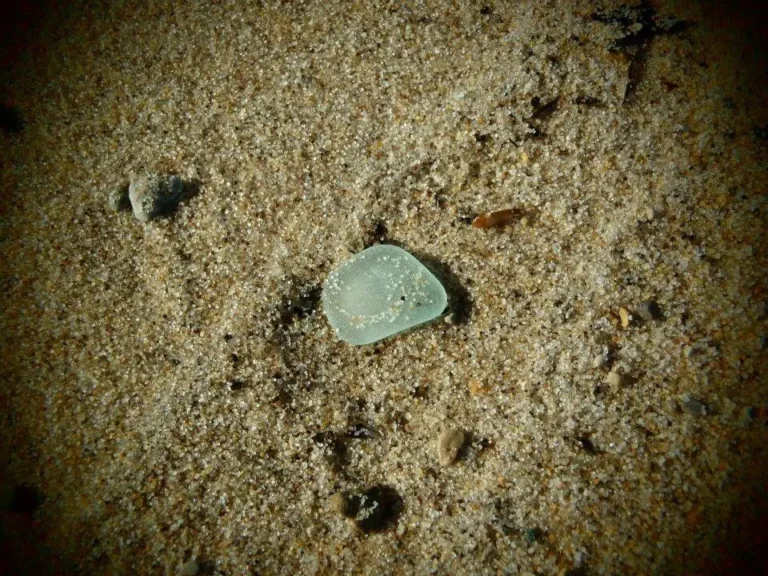
Beach glass
Why Lake Erie is famous for it, the rarest colors, and glass that glows under UV.

KEWEENAW
Copper, greenstone & more
Thomsonite, native copper, basalt and the other finds of Lake Superior’s shore.

FOSSILS
Crinoids & fossil corals
The fossils of Lake Michigan’s beaches: crinoid “Cheerios”, horn corals and Charlevoix stones.
Which stone, which lake?
Each Great Lake has its own signature finds. Here’s where to focus your search.
| Lake | Signature finds | Where to look |
|---|---|---|
| Lake Superior | Lake Superior agates, Yooperlites, greenstone, thomsonite, native copper | Gravel beaches of Michigan’s Upper Peninsula, Minnesota’s North Shore, Wisconsin’s south shore |
| Lake Michigan | Petoskey and Charlevoix stones, crinoids, fossil corals, Leland Blue, beach glass | Rocky beaches of northwest Lower Michigan, from Traverse City to Petoskey |
| Lake Huron | Petoskey stones (some), puddingstone, Devonian fossils | Northern shore and Drummond Island; fossils near Alpena |
| Lake Erie | Beach glass, fossils | Pennsylvania and Ohio shores |
| Lake Ontario | Beach glass | Shoreline beaches after storms |
When to go rock hunting
Spring
The best season. Winter ice and waves bring fresh stones to the beaches, and few people have searched them yet.
Summer
Easy beach days, but popular spots get picked over. Go early in the morning or try quieter stretches.
Fall
Storm season. The first calm day after big waves is a favorite of serious agate hunters.
Winter
For hardy beach glass and storm hunters only. Ice grippers, warm layers, and stay off the ice shelves.
Rule of thumb from Michigan’s geologists: go right after a storm, never during one.
Check the lake
Free official tools to see waves, wind and conditions before you drive to the beach.
Wave & wind forecasts
NOAA Great Lakes Coastal Forecasting System
Live buoy readings
NOAA National Data Buoy Center
Water temperature & ice
NOAA Great Lakes CoastWatch
Duluth harbor webcam
See Lake Superior’s waves right now
Start here
BEGINNERS
Rockhounding for beginners
The easiest stones to find, when and where to go, and the mistakes to avoid.
GEAR
What to bring
The simple checklist: bucket, spray bottle, good boots, and a 365 nm UV light for night hunts.
RULES
Can I collect here?
National parks, state parks, Michigan’s 25 lb rule, Minnesota’s ban: the rules, state by state.
Quick answers
Is it legal to take rocks from Great Lakes beaches?
It depends on who manages the land. Collecting is illegal in national parks and lakeshores. In Michigan you can take up to 25 lb per person per year from state land, while Minnesota bans rock collecting in all state parks. See the rules by state.
Where can I find Lake Superior agates?
On gravel beaches along Michigan’s Upper Peninsula, Minnesota’s North Shore and Wisconsin’s south shore, and in gravel pits inland, with permission. Read the agate guide.
Where are Petoskey stones found?
Mostly on Lake Michigan beaches in Michigan’s northwest Lower Peninsula, between Traverse City, Charlevoix and Petoskey. Wet the stones to see the pattern. Read the Petoskey guide.
What UV light do I need for Yooperlites?
A filtered 365 nm longwave UV flashlight. Cheap 395 nm lights often show very little. Read the Yooperlite guide.
When is the best time to look for rocks?
Spring after the ice goes out, and right after storms: never during one. Early mornings help on popular beaches.
An independent guide, built on sources
The information about Great Lakes rockhounding is scattered across Facebook groups, old forums and state agency PDFs, and much of it is out of date. We bring it together in one place, with every fact sourced, every guide dated, and real, credited photos.
Everything we publish follows our Rockhound Code of Ethics. Are you a local collector? We’d love your help.