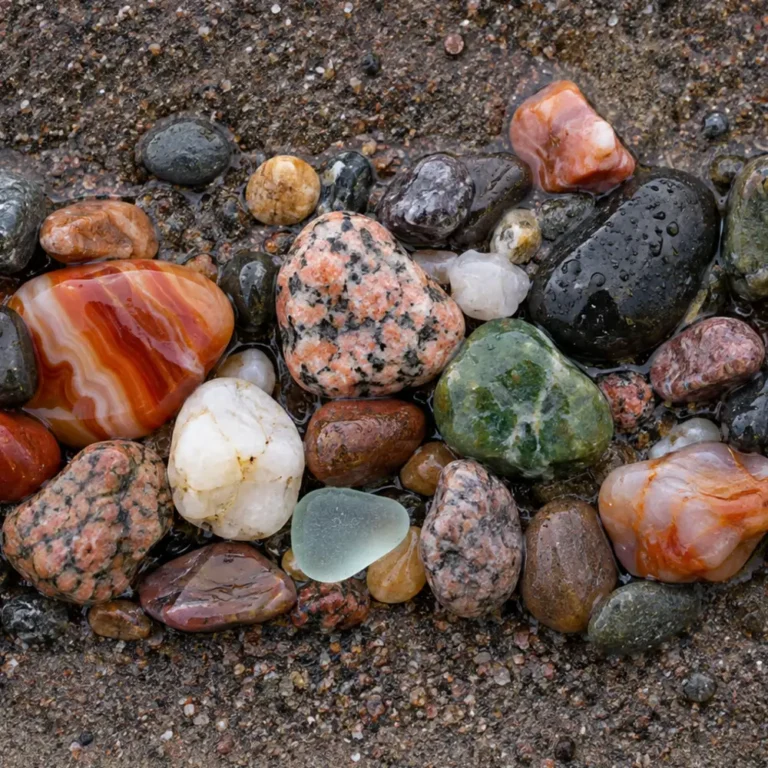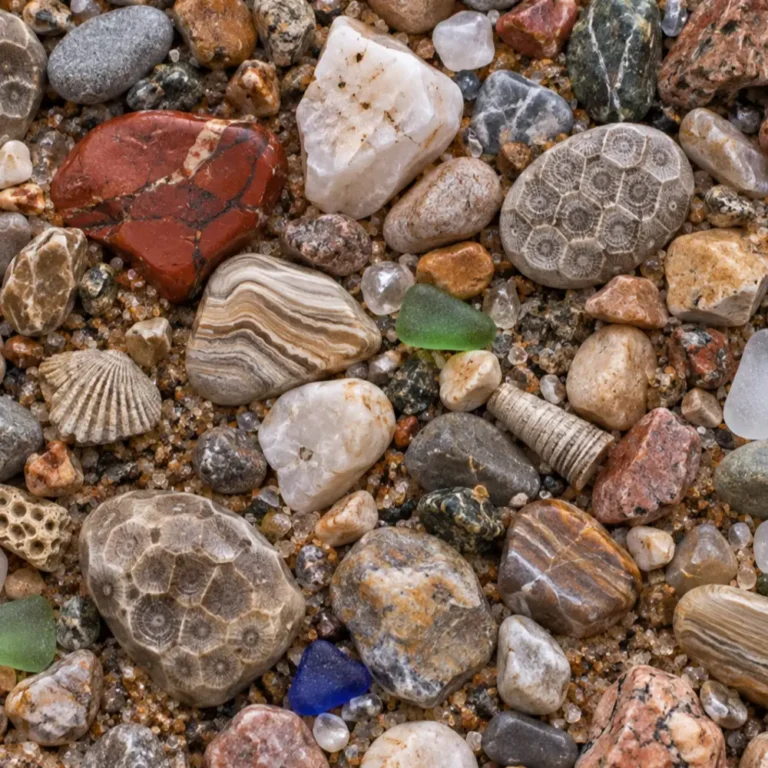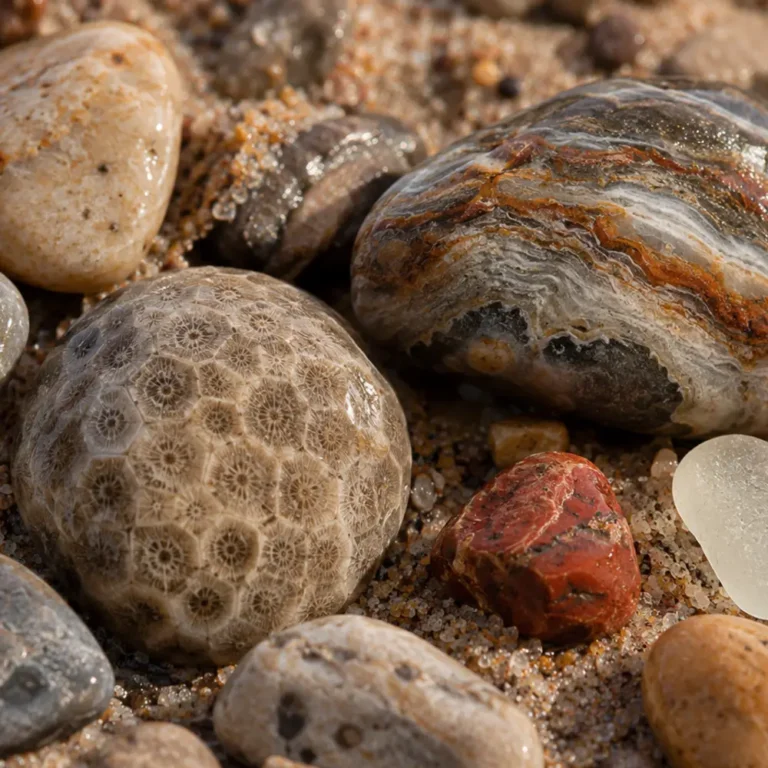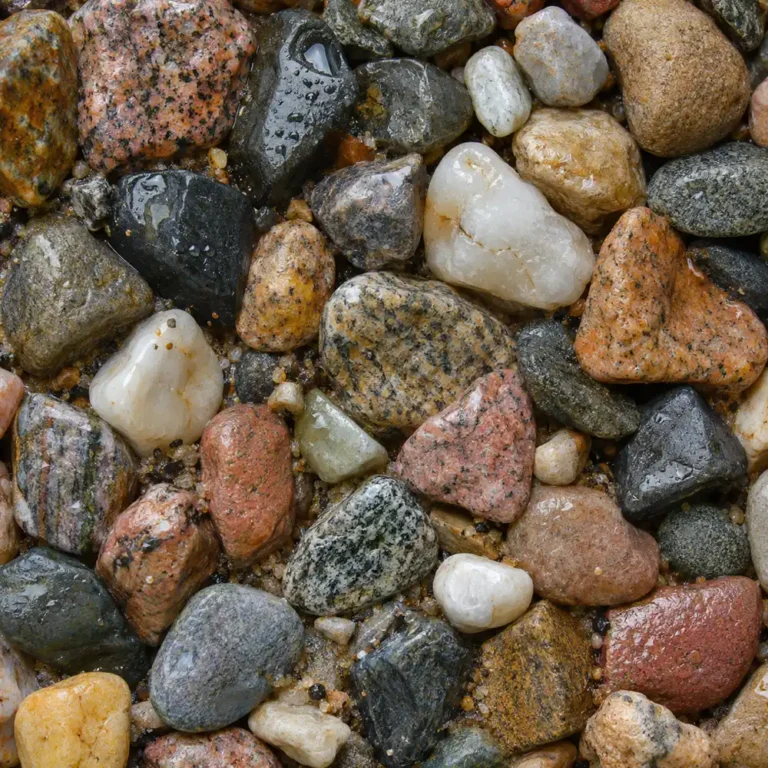
Lake Ontario’s New York shore is a quieter rock-hunting destination: you’ll find glacial stones, red sandstone and shale pebbles, and beach glass, but few fossils. The shoreline is shaped by glaciers, with dramatic drumlin bluffs like Chimney Bluffs. New York’s rules are strict: on state lands, removing rocks or fossils without a permit is illegal, and state parks ask visitors to leave rocks as they find them.
| What you can find | What it is | Where |
|---|---|---|
| Glacial stones | Granite, gneiss and other rocks carried from Canada | Beaches all along the shore |
| Red sandstone and shale pebbles | Pieces of the local Medina sandstone and Queenston shale | South shore |
| Beach glass | Old glass smoothed by the waves | Beaches near towns and harbors |
| Few fossils | The local red rocks are “not particularly fossiliferous” | Mostly trace fossils in the sandstone |
The geology of Lake Ontario’s south shore
The rocks along New York’s Lake Ontario shore form a simple sequence, from bottom to top:
- Queenston Shale: red shale from the Late Ordovician period, at lake level.
- Medina sandstone: red sandstone from the Early Silurian, mostly with trace fossils (tracks and burrows) rather than shells.
- Lockport Dolostone: the hard rock that caps the Niagara Escarpment, farther inland.
On top of this, the glaciers left a thick blanket of sediment shaped into thousands of drumlins, long rounded hills. Roughly 10,000 drumlins lie south and east of the lake. Where the waves cut into one, you get bluffs like Chimney Bluffs, whose sharp clay pinnacles were carved from drumlins by erosion.
Where to look
- Pebble beaches near towns and harbors are the best bet for beach glass, especially after storms.
- Beaches below bluffs collect glacial stones from the eroding till.
- Chimney Bluffs State Park: spectacular, but the bluffs are dangerous and unstable. Stay off the edges and away from the base, and leave everything in place.
When to go
- After storms, when waves bring new material onto the beach.
- Early in the morning on popular beaches.
- Spring and fall, when beaches are quieter.
Can you take rocks from Lake Ontario?
| Where | What the rules say |
|---|---|
| New York state parks | State park rules prohibit removing property and natural features, and the parks ask visitors to “leave rocks, plants, and other objects as you find them” |
| New York DEC lands (e.g., Wildlife Management Areas) | “Removing plants, rocks, fossils or artifacts from state land without a permit is illegal” |
| Private beaches | Only with the owner’s permission |
| Ontario (Canadian shore) | Different rules: check with Ontario Parks or the landowner |
Beach glass isn’t named in these rules. Ask the park office before taking any. See our full rock collecting rules.
Frequently asked questions
What rocks can you find on Lake Ontario?
Mostly glacial stones such as granite and gneiss, red sandstone and shale pebbles from the local bedrock, and beach glass. Fossils are rare.
Can you take rocks from Lake Ontario beaches in New York?
Not from state lands without a permit, and New York state parks ask visitors to leave rocks as they find them. On private beaches, ask the owner.
What are Chimney Bluffs?
Bluffs on Lake Ontario’s shore in New York, carved by erosion from glacial drumlins into sharp pinnacles. They’re unstable: admire them from a safe distance.
Is there beach glass on Lake Ontario?
Yes, on beaches near towns and harbors, especially after storms.
Explore more
- Beach glass on the Great Lakes
- Lake Erie rocks and beach glass
- Rockhounding for beginners
- Rock collecting rules
- Other Great Lakes: Lake Superior, Lake Michigan, Lake Huron, Lake Erie
Sources (8)
- New York State DEC, State Land Rules: https://dec.ny.gov/things-to-do/camping/state-land-rules
- 9 NYCRR 375.1 (state parks): https://www.law.cornell.edu/regulations/new-york/9-NYCRR-375.1
- 6 NYCRR 51.8 (Wildlife Management Areas): https://www.law.cornell.edu/regulations/new-york/6-NYCRR-51.8
- New York State Parks, “Love Our NY Lands”: https://parks.ny.gov/visit/love-our-ny-lands
- New York State DEC, Chimney Bluffs State Park, eroded remains of drumlins: https://dec.ny.gov/regulatory/permits-licenses/seqr/critical-environmental-areas/unique-geological-features/chimney-bluffs-state-park-eroded-remains-of-drumlins
- Rochester Academy of Science, geology of the Rochester region
- Cornell University, geology notes (2024): https://alumni.cornell.edu/wp-content/uploads/2024/07/Geology-DRAFT-for-CAU-2024.pdf
- Photo credits (via Wikimedia Commons; some backgrounds removed): Larsgl (public domain); James St. John (CC BY 2.0).
Last updated: November 29, 2026. Spotted something out of date? Tell us.