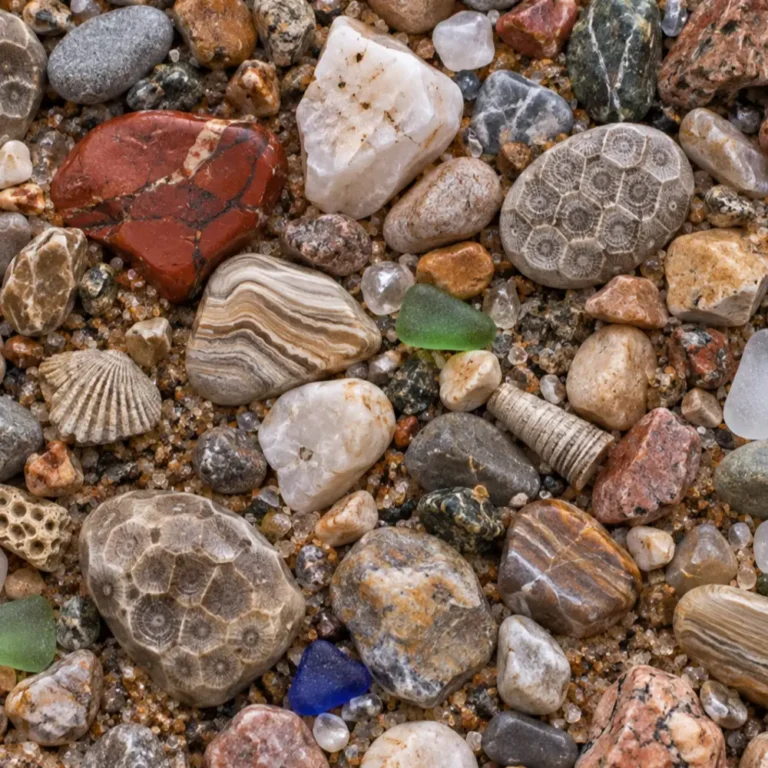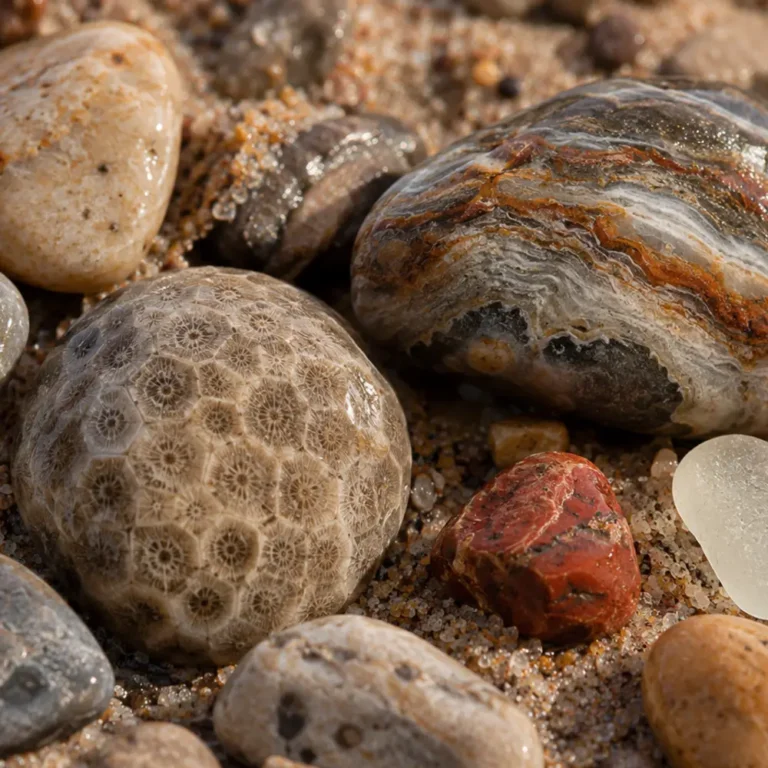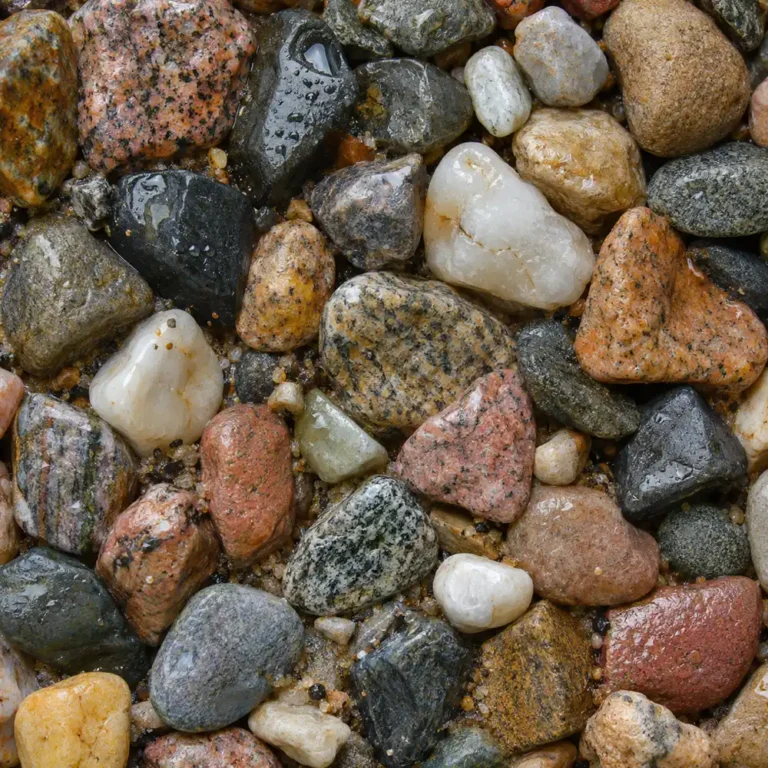
A Petoskey stone is a fossilized colony coral, Hexagonaria percarinata, that lived in a warm, shallow sea about 350 million years ago. It’s Michigan’s official state stone, and you’ll find it mostly on Lake Michigan beaches in the northwest Lower Peninsula, especially between Traverse City, Charlevoix and Petoskey. The trick to spotting one on a rock hunting trip: get it wet.
| Quick facts | |
|---|---|
| What it is | Fossil colony coral, Hexagonaria percarinata |
| Age | About 350 million years (Devonian period) |
| Official status | Michigan state stone since 1965 |
| Where | Mostly Lake Michigan shores of the northern Lower Peninsula; also inland gravel and some Lake Huron shores |
| Best time | Spring, after the ice goes out, and after storms |
| Collecting limit | 25 lb per person per year on Michigan state land |
| Where you can’t collect | National parks and lakeshores (Sleeping Bear Dunes, Isle Royale), private land without permission |
What is a Petoskey stone?
A Petoskey stone is both a rock and a fossil. Each one is a piece of a coral colony that grew on the floor of a shallow, salty sea that covered Michigan during the Devonian period, when the region sat much closer to the equator.
When the corals died, their skeletons were buried and filled in with limestone and other sediment. Hundreds of millions of years later, glaciers moving southeast across Michigan scraped pieces of this fossil-rich bedrock loose, rounded them, and scattered them across the northern Lower Peninsula. That’s why most Petoskey stones you’ll find are smooth pebbles, not jagged chunks.
The rock layers they come from are called the Traverse Group. The farther you go from those layers, the fewer Petoskey stones you’ll find.
How do you identify a Petoskey stone?
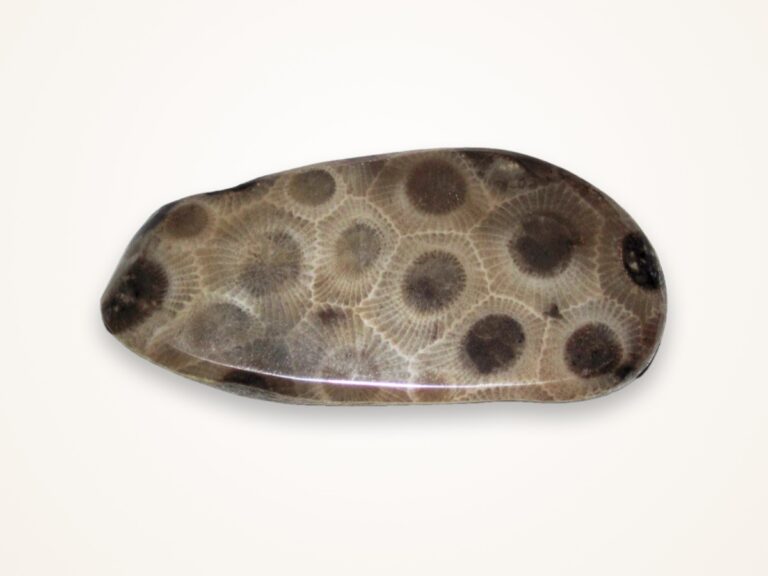
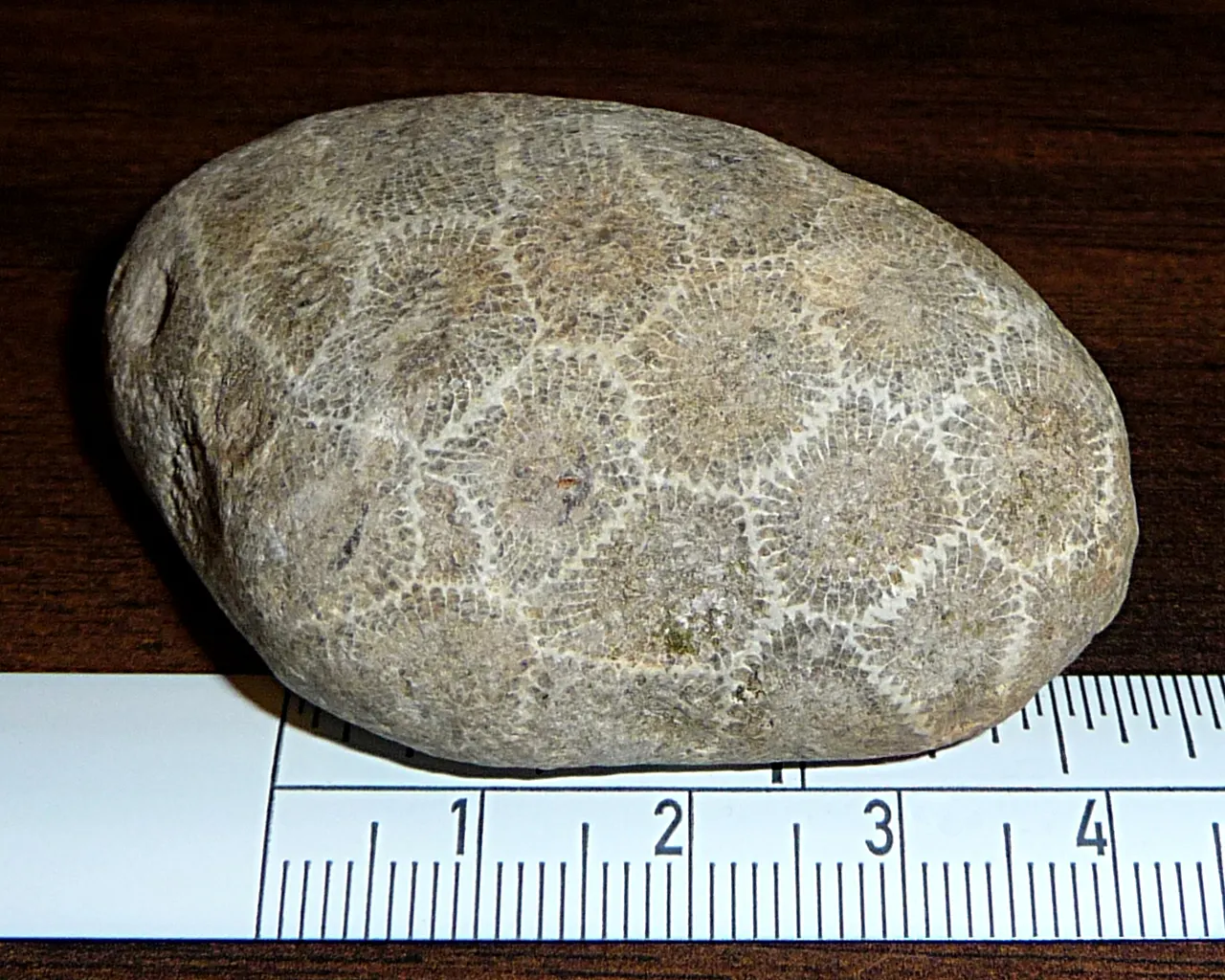
Look for a tight honeycomb of six-sided cells, each with a dark dot in the middle.
- The cells (corallites): each six-sided cell was one coral animal living in the colony.
- The “eye”: the dark center of each cell was the coral’s mouth.
- The radiating lines: the fine lines around each eye mark where the tentacles were.
- The color: usually gray to tan or brown, often rounded and smooth.
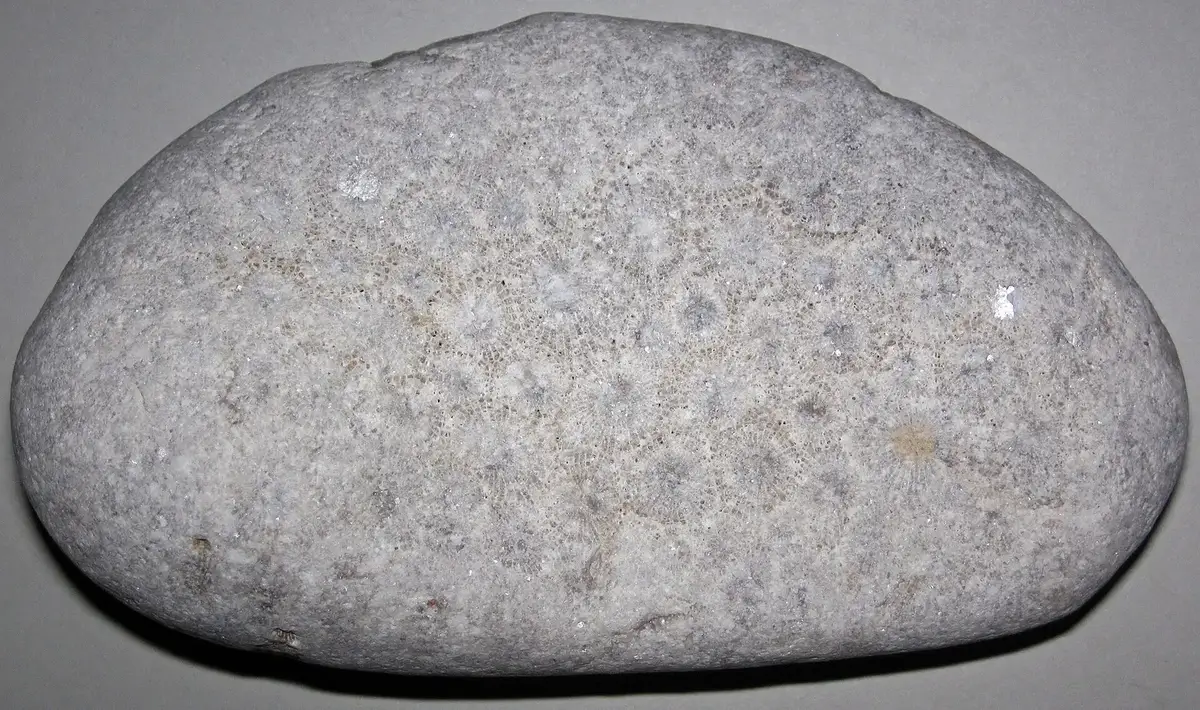
Dry vs. wet: why most people walk right past them
A dry Petoskey stone often looks like a plain gray pebble. The pattern is there, but it’s faint. Once the stone is wet, the honeycomb pops out. That’s why experienced hunters walk the wet edge of the water, or carry a spray bottle on dry beaches and mist any gray stone that looks promising.
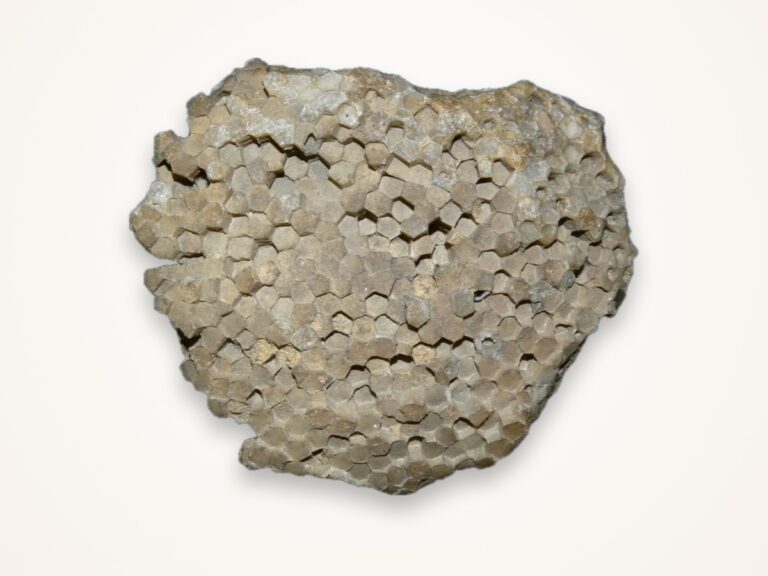
Petoskey stone or a lookalike?
Several other fossil corals turn up on the same beaches. Here’s how to tell them apart:
| Fossil | What you see | How it differs from a Petoskey stone |
|---|---|---|
| Petoskey stone (Hexagonaria) | Six-sided cells, each with a dark eye and radiating lines | The eye and the radiating lines are the giveaway |
| Charlevoix stone (Favosites) | A honeycomb of small cells | Cells are smaller and have no eye and no radiating lines |
| Chain coral (Halysites) | Lines of small oval cells linked like a chain | Looks like chains or loops, not a honeycomb |
| Horn coral (solitary rugose coral) | A single cone or horn shape with lines | One animal, not a colony of cells |
| Pipe coral (Syringopora) | Bundles of thin tubes | Tubes instead of six-sided cells |
If you’re unsure, wet the stone and look closely with a magnifying glass. If you can see an eye in the middle of the cells, you’ve likely found a Petoskey stone.
Where can you find Petoskey stones?
Petoskey stones are spread across the northern Lower Peninsula, from Lake Michigan to Lake Huron, but the classic hunting grounds are the Lake Michigan beaches of the northwest Lower Peninsula.
Well-known areas (check the collecting rules for each one before you go, see below):
- Petoskey and Little Traverse Bay: Petoskey State Park is one of the most popular spots.
- Charlevoix: Fisherman’s Island State Park and Mt. McSauba Recreation Area.
- Beaver Island.
- Traverse City area beaches.
- Lake Huron shores in the northeast Lower Peninsula, where Petoskey stones show up less often.
- Inland: gravel roads, gravel pits and farm fields, where the glaciers left them. Only collect inland with the landowner’s permission.
Avoid the crowds. Petoskey State Park and the beaches in the town of Petoskey are the best known, so they get picked over fast, especially in summer. Quieter rocky stretches along the same coast, early mornings and the off-season usually give better results.
Where you can’t take them: Sleeping Bear Dunes National Lakeshore has Petoskey stones on its beaches, but removing stones from the lakeshore is illegal under federal law. Look, take a photo, and leave it.
What kind of beach should you look for?
Skip the pure-sand beaches. Look for stretches with lots of small rocks and pebbles, ideally uncrowded ones. Walk slowly along the waterline, where the stones are wet, and scan for gray stones with a pattern. When you’re done, lay out your haul and wet it again: patterns you missed often show up.
When is the best time to find Petoskey stones?
Spring is the best season. Over the winter, ice and waves push a fresh layer of stones onto the beaches, and in spring they haven’t been picked over yet.
After a storm is also a good time, because big waves turn over the stones near shore. Storms can also strip stones off a beach, so results vary.
Is it legal to take Petoskey stones?
Yes, in many places, but with limits. The rules depend on who owns the land:
| Where you are | Can you collect? |
|---|---|
| Michigan state land (state parks, state forests, other DNR land) | Yes, up to 25 lb per person per year in total, for personal, non-commercial hobby use |
| Great Lakes beaches below the ordinary high water mark | The public can walk this area, and the same 25 lb yearly limit is enforced on state-owned bottomlands |
| National parks and national lakeshores (Sleeping Bear Dunes, Pictured Rocks, Isle Royale) | No. Collecting is illegal under federal law |
| Private land | Only with the owner’s permission |
| City and county parks | Rules vary. Check with the local park office |
The 25-pound limit is a yearly total, not a limit per beach. It comes from Michigan’s state land use rules (Michigan Administrative Code R 299.922), which cover rocks, mineral specimens and invertebrate fossils like Petoskey stones.
The rule is enforced. In 2015, a man pulled a 93-pound Petoskey stone out of Lake Michigan near Northport. Because it was well over the limit, the state confiscated it. It’s now displayed at the DNR’s Outdoor Adventure Center in Detroit.
Rules change, and posted signs always win. Before you collect, check the current rules with the land manager. Our guide to rock collecting rules explains them in more detail.
Are Petoskey stones worth anything?
Most beach-found Petoskey stones are common and are worth more to the person who found them than on the market. Polished stones, jewelry and unusually large or well-patterned specimens sell for more in gift shops and online.
What raises a stone’s value:
- a clear, even pattern across the whole stone;
- size, while staying within legal limits;
- a good polish without scratches or pits;
- unusual colors.
Note that selling stones collected on Michigan state land isn’t allowed: the 25-pound allowance is for personal, non-commercial use only.
What is the biggest Petoskey stone ever found?
The best-documented big find is the 93-pound stone pulled from Lake Michigan near Northport in 2015 (see above). Much larger Petoskey boulders have been reported, including one displayed at the Besser Museum in Alpena, but the published weights vary from source to source, so we don’t name a single record holder.
How do you make a Petoskey stone shiny?
Petoskey stones are soft, so most people polish them by hand: wet sanding with finer and finer sandpaper, then buffing with polishing powder. Tumbling is risky because the stones can crumble or lose their pattern.
Don’t soak a Petoskey stone in vinegar. Petoskey stones are made of calcium carbonate, the same material as limestone, and vinegar is an acid that dissolves it. A soak can etch the surface and blur the pattern.
For the full step-by-step method, see our guide on how to polish Petoskey stones.
Why is it called a Petoskey stone?
The stone takes its name from the city of Petoskey, on Little Traverse Bay. The city itself is named after Ignatius Petosegay, an Odawa merchant and landowner. In 1965, Governor George Romney signed the law that made the Petoskey stone Michigan’s official state stone.
Frequently asked questions
Are Petoskey stones only found in Michigan?
Petoskey stones come from the Devonian rocks of Michigan’s Traverse Group, so the stones known as Petoskey stones are found in Michigan, mostly in the northern Lower Peninsula. The National Park Service describes them as unique to the Great Lakes.
How rare is it to find a Petoskey stone?
Not rare in the right place. Lake Michigan’s rocky beaches in the northwest Lower Peninsula are prime territory, especially in spring. Large, perfectly patterned stones are much harder to find, and coming home with only a few small ones is completely normal, even for experienced hunters.
How old are Petoskey stones?
About 350 million years old. They formed during the Devonian period.
Can you find Petoskey stones on Lake Superior?
Generally no. Petoskey stones come from rock layers in Michigan’s Lower Peninsula, so look on Lake Michigan and Lake Huron beaches instead. Lake Superior is the place for agates.
Can you find Petoskey stones in Lake Huron?
Yes, but less often than on Lake Michigan. Petoskey stones are spread across the northern Lower Peninsula, including some Lake Huron shores.
Is it illegal to collect Petoskey stones in Sleeping Bear Dunes?
Yes. Removing stones from Sleeping Bear Dunes National Lakeshore is illegal under federal law, even small ones.
Related guides
Sources (8)
- National Park Service, Sleeping Bear Dunes National Lakeshore, “Beaches”: https://www.nps.gov/slbe/learn/nature/beaches.htm
- Michigan Administrative Code R 299.922(hh), State Land Use Rules: https://www.law.cornell.edu/regulations/michigan/Mich-Admin-Code-R-299-922
- Michigan Public, “Can you find Petoskey stones outside of Petoskey?” (July 31, 2026): https://www.michiganpublic.org/podcast/on-hand/2026-07-31/can-you-find-petoskey-stones-outside-of-petoskey
- Pure Michigan, “Where to Find Petoskey Stones in Michigan”: https://www.michigan.org/article/trip-idea/where-find-petoskey-stones-michigan
- Visit Charlevoix, Petoskey stones: https://visitcharlevoix.com/PetoskeyStone
- Michigan Public, “93-pound Petoskey rock to be displayed in Detroit” (2017): https://www.michiganpublic.org/offbeat/2017-10-10/93-pound-petoskey-rock-to-be-displayed-in-detroit
- Petoskey Area Visitors Bureau, Petoskey Stone: https://petoskeyarea.com
- Photo credits (via Wikimedia Commons; some backgrounds removed): James St. John (CC BY 2.0); Wilson44691 (public domain); David J. Fred (Dfred) (CC BY 3.0).
Last updated: November 29, 2026. Spotted something out of date? Tell us.