To polish a Petoskey stone, wet-sand it by hand with 220, then 400, then 600 grit silicon carbide sandpaper, removing every scratch before moving on, then rub it on a damp cloth with a pinch of tin oxide, cerium oxide or aluminum oxide polish. Petoskey stones are soft (about 3 on the Mohs scale), so hand polishing gives you the most control. Plan on an hour or two for a palm-sized stone.
| What you need | Why |
|---|---|
| Wet/dry silicon carbide sandpaper: 220, 400 and 600 grit (80 grit optional) | Each grit removes the scratches left by the one before |
| A thick pad: folded towel, newspaper or rubber mat | Lets the paper follow the stone’s curve |
| A bowl of water | Keeps the stone and paper wet, which cuts dust and speeds sanding |
| Polishing compound: tin oxide, cerium oxide or aluminum oxide | Brings out the final shine |
| A scrap of cotton, corduroy, velvet, felt or denim | Holds the polish while you rub |
| A towel to dry the stone between grits | Scratches only show when the stone is dry |
Before you start: pick the right stone
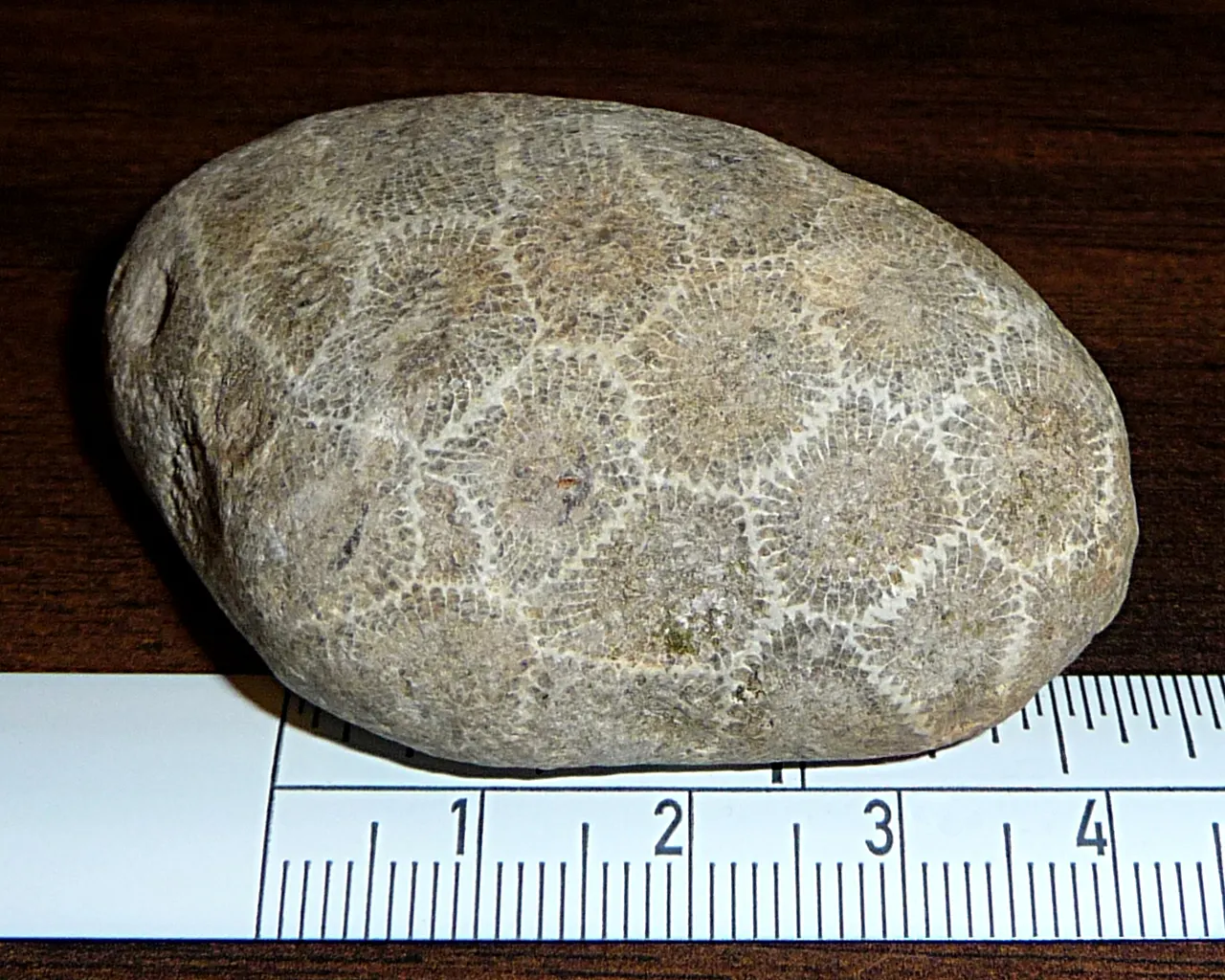
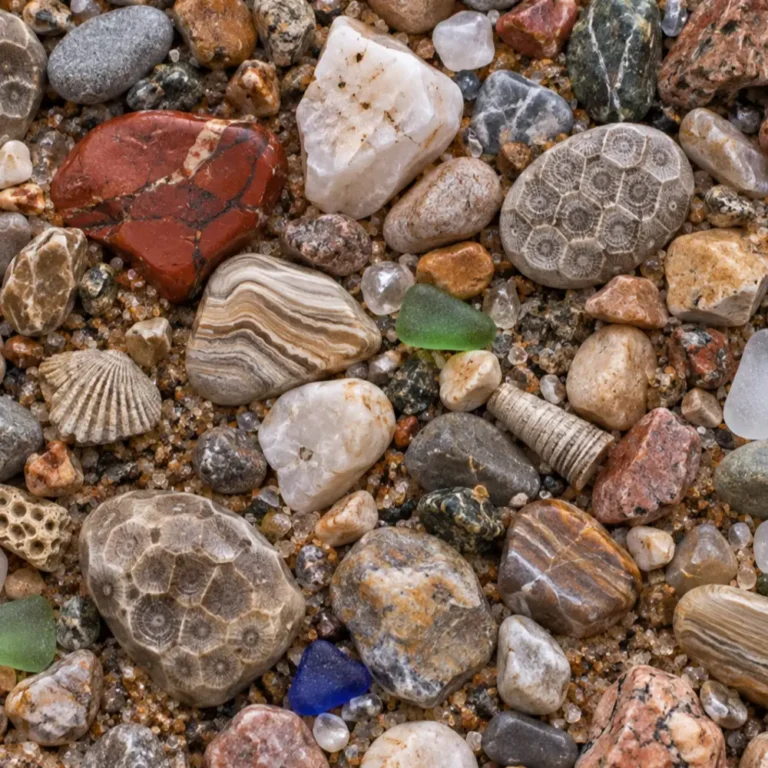
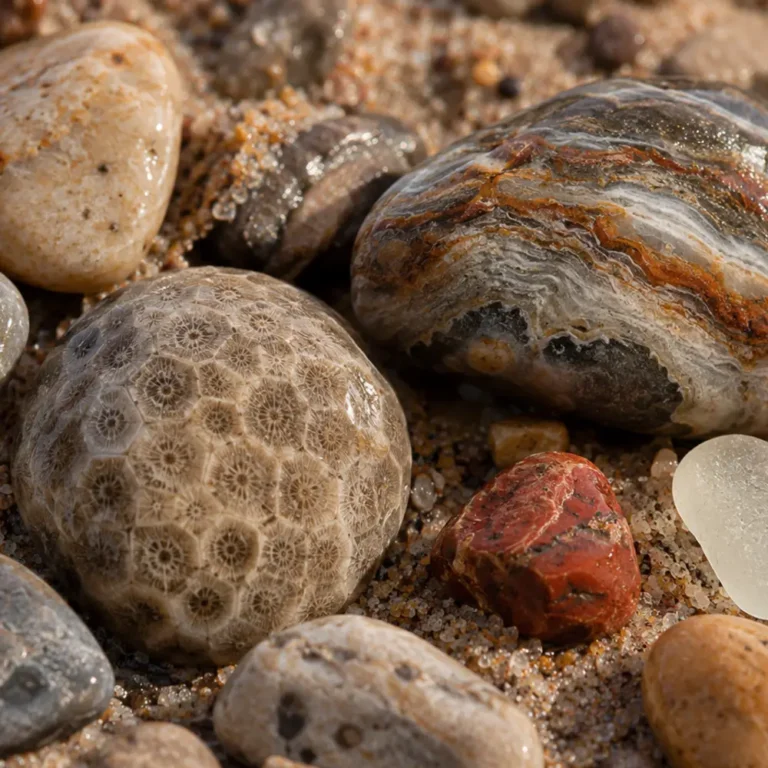
Not every Petoskey stone is worth polishing. Choose a stone that is solid coral all the way through: no deep pits, no open pores, and no crust of other rock stuck to it. Stones full of pits and pores polish poorly, because the holes never disappear and catch the polish.
Wet the stone first. The pattern you see when it’s wet is roughly what you’ll see once it’s polished.
How to polish a Petoskey stone by hand, step by step
Step 1: Shape and smooth with 220 grit
Lay a quarter sheet of 220 grit wet/dry sandpaper on your pad. Wet the stone and the paper, then sand with a steady, circular motion. Go gently: this first grit removes material fast on such a soft stone.
Keep going until the whole face you want to polish is evenly smooth and any rough spots are gone. If your stone has deep chips or a very rough surface, start with 80 grit and then move to 220.
Rinse the sandpaper every so often to clear out the stone mud, and change your water halfway through.
Step 2: Check, then move to 400 grit
Rinse the stone and dry it completely. Look at it closely, ideally under a bright light. Wet stones hide scratches; dry stones show them.
Switch to 400 grit and sand the same way. This step should remove all the scratches from the 220 grit, plus any white spots on the surface.
Step 3: Refine with 600 grit
Rinse, dry, check again, then sand with 600 grit. When you’re done, the stone should look smooth and evenly matte when dry, with no visible scratches.
This is the most important rule: every scratch must be gone before you polish. Polish won’t hide a scratch. It makes it more visible. If you still see scratches, go back one grit.
If you want an even finer finish, you can add a 1000 grit step before polishing.
Step 4: Polish
Lightly dampen your cloth and sprinkle a very small amount of polishing compound on it: tin oxide, cerium oxide or aluminum oxide all work. Rub the stone with short, rotating strokes. Long, heavy rubbing doesn’t help much.
The shine appears quickly once the surface is properly prepared. If scratches show up under the shine, go back to 400 grit and work through the steps again.
Step 5: Rinse and enjoy
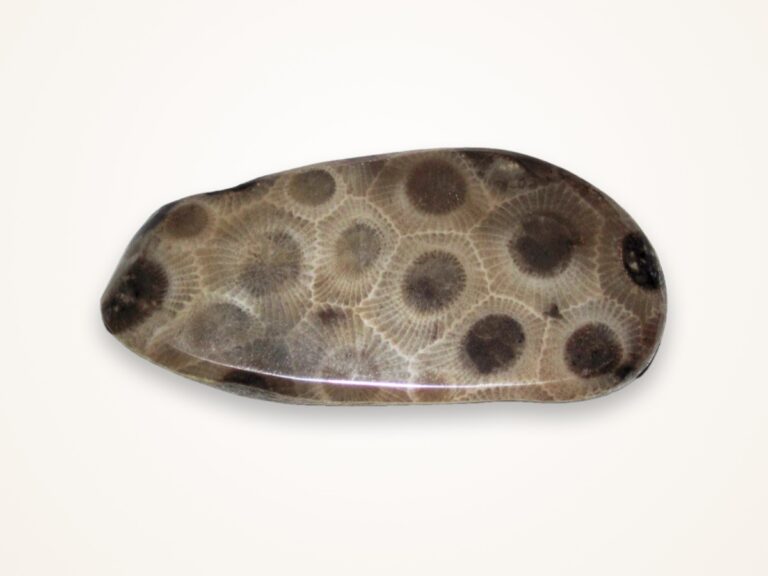
Rinse off the polish and dry the stone. That’s it: a properly polished Petoskey stone keeps its shine without any coating.
Why did my Petoskey stone come out dull and gray in the tumbler?
It’s the most common tumbling disappointment. Petoskey stones are much softer than the agates and jaspers a tumbler is designed for, so the barrel wears down the surface and the fine pattern instead of polishing it. The fix: sand and polish by hand, as described above. If you want to keep using a tumbler, follow the rules below.
Can you polish Petoskey stones in a rock tumbler?
You can, but it’s risky, and most experienced polishers do it by hand. Petoskey stones are made of calcite, which is much softer than the agates and jaspers people usually tumble. In a tumbler they can:
- shrink a lot if left too long;
- lose their shape, because the tumbler wears down points, edges and softer areas first;
- reveal pores and fractures after the first grinding stage.
If you still want to try, follow these rules:
| Rule | Why |
|---|---|
| Tumble Petoskey stones only with other soft stones, never with agates, jasper or anything harder than about 4 on the Mohs scale | Harder stones grind soft ones away |
| Fill at least half the barrel with cushioning media (ceramic media, plastic pellets or walnut shell) | Reduces chipping and size loss |
| Use less grit and keep each stage short: about 1 to 2 days with medium grit (180/220), 1 to 2 days with 500 or 600 grit, then about 1 day with 1000 grit | Soft stones wear very fast |
| Check the stones every day | Stop before you lose the pattern |
| Polish in a vibratory tumbler with dry corn cob media and a little aluminum oxide polish, with only a few stones | Gentler than a rotary barrel |
| Stop when the shine starts to fade | Petoskey stones can be overpolished |
Throw out any stone that shows pores or cracks after the first stage: it won’t take a good polish.
Common problems and how to fix them
| Problem | Likely cause | Fix |
|---|---|---|
| Scratches visible after polishing | A grit stage was rushed | Go back to 400 grit, then 600, then polish again |
| White spots on the surface | Not enough sanding at 400 grit | Sand longer at 400 grit, then continue |
| Shiny when wet, dull when dry | The surface still has fine scratches | Return to 600 (or 1000) grit before polishing |
| Pits that won’t go away | Natural pores in the stone | Live with them, or choose a solid stone next time |
| Stone shrank or lost its pattern in a tumbler | Too long or too aggressive | Shorter stages, more media, finer grit, or polish by hand |
Should you soak Petoskey stones in vinegar?
No. Petoskey stones are made of calcite (calcium carbonate), and vinegar is an acid that dissolves it: that’s the fizzing you see. A soak eats away the surface and can blur the fine lines of the pattern. If you want to clean a stone, use water, mild dish soap and a soft brush.
What about mineral oil?
A light coat of mineral oil gives an unpolished stone a temporary “wet look” that shows off the pattern. It isn’t a polish: the effect fades over time, and the oil can attract dust. It’s a quick way to display a stone you don’t want to sand. A hand-polished stone doesn’t need it.
Safety tips
- Always sand wet. Rock dust is harmful to breathe, and water keeps it down. If you use power tools, add a dust mask and plenty of water spray.
- Work on a surface you can wash, and dispose of the stone mud in the trash, not down the sink.
Frequently asked questions
What grit sandpaper do you use for Petoskey stones?
220, 400 and 600 grit wet/dry silicon carbide sandpaper is the classic sequence. Add 80 grit at the start for rough stones and 1000 grit at the end for an extra-fine finish.
What is the best polish for Petoskey stones?
Tin oxide, cerium oxide and aluminum oxide all work. Use a very small amount on a damp cotton, corduroy, velvet, felt or denim cloth.
How long does it take to polish a Petoskey stone?
About an hour or two by hand for a stone a few inches across. Lapidary machines (sanding wheels or belts) are much faster.
Can you use the same method on Charlevoix stones?
Yes. The same hand method works for most carbonate stones, including Charlevoix stones (Favosites).
Is it legal to polish and sell Petoskey stones?
Polishing your own stones is fine. Stones collected on Michigan state land fall under a 25 lb per person per year limit for personal, non-commercial hobby use, so they aren’t meant for resale. See our Petoskey stone guide for the collecting rules.
Related guides
Sources (5)
- Central Michigan Lapidary & Mineral Society, “Petoskey Polishing” (method contributed by Frank Rickerd): https://michrocks.org/rockin-fun/petoskey-polishing
- RockTumbler.com (Hobart M. King, PhD, geologist), “Polished Petoskey Stones”: https://rocktumbler.com/blog/polished-petoskey-stones/
- Mama’s Minerals, “How to Polish Petoskey Stones with a Tumbler” (2021): https://www.mamasminerals.com/blogs/mamas-minerals-blog/how-to-polish-petoskey-stones-with-a-tumbler/
- Michigan Administrative Code R 299.922(hh): https://www.law.cornell.edu/regulations/michigan/Mich-Admin-Code-R-299-922
- Photo credits (via Wikimedia Commons; some backgrounds removed): David J. Fred (Dfred) (CC BY 3.0); James St. John (CC BY 2.0).
Last updated: November 29, 2026. Spotted something out of date? Tell us.